
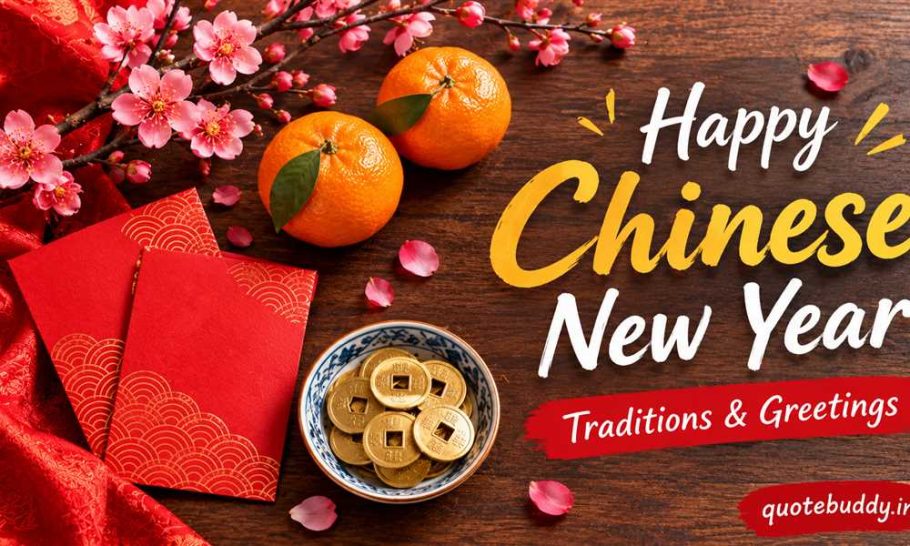
Chinese New Year, also known as Lunar New Year or the Spring Festival in China, is one of the most important traditional celebrations for many communities across Asia and around the world. It marks the beginning of a new year according to the traditional lunisolar calendar and is a time for family reunions, cultural traditions, good wishes, and fresh beginnings. Whether you’re celebrating with loved ones or sending greetings to someone who observes the festival, these wishes and traditions can help you share the occasion with warmth and respect.
Chinese New Year Wishes & Greetings
Short & Simple Greetings
A simple greeting can be a lovely way to wish someone happiness and good fortune during the Lunar New Year. These messages work well for texts, greeting cards, WhatsApp, and social media.
- Happy Chinese New Year! Wishing you peace, happiness, and a wonderful year ahead.
- May the new year bring fresh opportunities and beautiful moments to your life.
- Wishing you and your family health, harmony, and happiness this Lunar New Year.
- May your home be filled with warmth, laughter, and good fortune. Happy New Year!
- Here’s to new beginnings, meaningful connections, and brighter days ahead.
- Sending warm wishes for a joyful and prosperous Chinese New Year.
- May the year ahead bring you strength, success, and plenty of reasons to smile.
- Happy Lunar New Year! May every new day bring hope and happiness.
Traditional Chinese New Year Phrases with Meaning
Traditional Chinese New Year greetings often express wishes for prosperity, health, happiness, and success. Many are short phrases in Mandarin Chinese that are widely recognized during the festival. Here are six useful expressions, along with their meanings.
- Gong Xi Fa Cai (恭喜发财) – A popular greeting that means “wishing you happiness and prosperity” or, more literally, “congratulations and prosperity.” It is especially associated with hopes for financial good fortune. It is pronounced approximately gong-shee fah-tsai in Mandarin.
- Xin Nian Kuai Le (新年快乐) – Meaning “Happy New Year,” this is a straightforward and widely used greeting. It is suitable for friends, relatives, colleagues, and acquaintances.
- Wan Shi Ru Yi (万事如意) – This phrase means “may everything go as you wish.” It expresses a wish for things to work out smoothly and positively throughout the year.
- Shen Ti Jian Kang (身体健康) – Meaning “good health,” this greeting is often used to wish loved ones physical well-being and strength.
- Nian Nian You Yu (年年有余) – Meaning “may you have abundance year after year,” this expression is associated with prosperity and having more than enough. The word for “surplus” (余, yú) sounds like the word for “fish” (鱼, yú), which helps explain why fish is a familiar symbol in New Year meals and decorations.
- Ji Xiang Ru Yi (吉祥如意) – This means “may good fortune and everything you wish for come your way.” It is a warm expression for sharing hopes of happiness and good luck.
These are Mandarin expressions. Chinese communities speak different languages and varieties, including Cantonese, so pronunciation and preferred greetings can vary by region and family.
Chinese New Year Wishes for Family & Friends
The Lunar New Year is closely associated with family connections and spending time with people who matter. These heartfelt messages are suitable for relatives, friends, and loved ones.
- May this Lunar New Year bring our family closer, fill our home with laughter, and give us many beautiful memories to cherish.
- Wishing you a year of good health, steady progress, and happiness in everything you do. Happy Chinese New Year!
- May the coming year reward your hard work, support your dreams, and bring you closer to the life you hope to build.
- To my dear friends, may your days be filled with kindness, your plans find success, and your hearts always have reasons to celebrate.
- Sending love and warm wishes to you and your family. May this new year bring peace to your home and joy to every generation.
- No matter how far apart we may be, I hope this celebration reminds us of the bond we share. Wishing you a happy and meaningful New Year.
Chinese New Year Traditions & Customs
Chinese New Year traditions have developed over many centuries, and the way people celebrate varies across regions, families, and Chinese communities worldwide. Some customs are connected with welcoming good fortune, while others focus on family, remembrance, and starting the year with a sense of renewal.
One of the most important occasions is the reunion dinner, traditionally held on New Year’s Eve. Family members often travel long distances to gather around the same table and share a special meal. The dishes vary by region and household, but some foods carry symbolic meanings. Fish can represent abundance, dumplings are associated with wealth in some northern Chinese traditions, and long noodles may symbolize longevity. The meal is as much about being together as it is about the food.
Another familiar custom is giving red envelopes, known as hongbao in Mandarin. These envelopes usually contain money and are traditionally given by elders to children and younger family members. The red color is associated with happiness, celebration, and good fortune. In modern celebrations, digital red envelopes are also exchanged through mobile payment platforms. The amount and customs surrounding these gifts vary between families and communities.
Festive performances add energy to public celebrations. Lion dances and dragon dances are performed during the holiday in many places, often accompanied by drums, cymbals, and other music. Although both involve elaborate costumes and coordinated movement, they are different traditions: a lion dance is generally performed by two dancers inside a lion costume, while a dragon dance involves a team of performers moving a long dragon figure on poles. They are often associated with welcoming good fortune and celebrating the new year.
Fireworks and firecrackers have a long history in Chinese New Year celebrations. Traditionally, loud sounds and bright displays were believed to help drive away harmful influences and welcome a fortunate year. Today, fireworks remain part of some celebrations, although restrictions, safety rules, and environmental concerns mean that practices differ from place to place. In some cities, public light shows and organized displays replace private fireworks.
Before the new year begins, many families also clean their homes. This custom is often understood as clearing away the old year’s troubles and making space for fresh opportunities. Cleaning is traditionally completed before New Year’s Day because some households avoid sweeping or taking out rubbish on the first day, as it may symbolically sweep away good luck. Another important feature is the Chinese zodiac, a repeating cycle of 12 animals: Rat, Ox, Tiger, Rabbit, Dragon, Snake, Horse, Goat (also called Sheep), Monkey, Rooster, Dog, and Pig. Each Lunar New Year is associated with one of these animals, and the cycle repeats every 12 years.
Chinese New Year Captions for Social Media
Sharing photos of family gatherings, festive decorations, traditional food, or cultural performances? These short captions are suitable for Instagram, Facebook, and other social platforms.
- Welcoming the Lunar New Year with gratitude, hope, and happiness.
- New year, fresh beginnings, and blessings for the days ahead.
- Celebrating family, traditions, and the joy of being together.
- May the year ahead bring abundance, good health, and beautiful memories.
- A little more joy, a little more kindness, and a whole lot of good fortune.
- Sending warm wishes for a bright and prosperous Lunar New Year!
Frequently Asked Questions
1. When is Chinese New Year celebrated?
Chinese New Year falls on a different date each year because it follows the traditional Chinese lunisolar calendar rather than the Gregorian calendar. It usually takes place between January 21 and February 20. The celebration begins with the first day of the lunar calendar’s first month. The date changes annually, so it is best to check the calendar for the particular year if you’re planning to celebrate or send greetings.
2. What is the Chinese zodiac animal cycle?
The Chinese zodiac is a traditional 12-year cycle in which each year is associated with an animal. The animals appear in this order: Rat, Ox, Tiger, Rabbit, Dragon, Snake, Horse, Goat or Sheep, Monkey, Rooster, Dog, and Pig. After the Pig year, the cycle starts again with the Rat. Each animal is associated with traditional cultural meanings and characteristics. Many people enjoy learning which zodiac animal corresponds to their birth year, although interpretations vary.
3. What foods are traditionally eaten during Chinese New Year?
Food is an important part of Chinese New Year celebrations, and many dishes carry symbolic meanings. Popular choices include fish, which often represents abundance and having more than enough in the coming year; dumplings, associated with wealth and prosperity in some Chinese regions; longevity noodles, whose length symbolizes hopes for a long and healthy life; rice cakes (nian gao), associated with growth, progress, and improvement; sweet rice balls (tangyuan), often enjoyed during the Lantern Festival and associated with family togetherness and unity; and spring rolls, whose golden appearance is sometimes associated with wealth and prosperity. The dishes served depend on regional traditions, family preferences, and local ingredients. There is no single menu followed by everyone.
4. Why are red envelopes given during Chinese New Year?
Red envelopes, called hongbao in Mandarin, are traditionally given to children and younger family members by elders. They usually contain money and symbolize good wishes, blessings, and hopes for good fortune in the new year. The red color has positive associations in Chinese culture, including happiness and celebration. The amount placed inside an envelope may depend on family customs and personal circumstances. In recent years, digital red envelopes have also become popular, allowing people to send festive gifts electronically.
5. How long does the Chinese New Year celebration last?
Traditionally, Chinese New Year celebrations extend for about 15 days, beginning on New Year’s Day and concluding with the Lantern Festival on the 15th day of the first lunar month. The first days often focus on family visits, greetings, meals, and traditional customs. The Lantern Festival brings the celebration to a close with lantern displays, festive activities, and special foods such as sweet rice balls in many communities. The length of official public holidays varies by country and region. In mainland China, for example, the official holiday period is shorter than the full traditional festival period.
Chinese New Year is a celebration of family, cultural heritage, renewal, and hope. Whether you mark the occasion with a reunion dinner, exchange red envelopes, enjoy festive performances, or simply send a thoughtful greeting, the spirit of the festival lies in sharing good wishes and welcoming new beginnings. Xin Nian Kuai Le! Gong Xi Fa Cai! May the year ahead bring happiness, health, and prosperity to you and your loved ones.
